The CEO Attention Operating System: A 24-Hour Sound Protocol for Better Decisions, Faster Recovery, and Sustainable Output
A practical, science-aware routine for leaders to protect focus, reduce decision fatigue, and sleep better using structured sound blocks.
The CEO Attention Operating System: A 24-Hour Sound Protocol for Better Decisions, Faster Recovery, and Sustainable Output
Most founders and executives don’t have a time-management problem. They have an attention allocation problem.
Your calendar might be optimized, your team might be strong, and your priorities might be clear. But if your mental state is noisy, fragmented, or fatigued, high-value decisions get delayed, shallow work expands, and recovery happens too late. Over time, that compounds into lower strategic quality, slower execution, and preventable burnout.
The hard truth: modern leadership is less about “working harder” and more about state transitions. You move from deep thinking to meetings, from conflict to planning, from pressure to rest—often with no reset in between.
That’s where structured sound can become a performance lever.
Not as background entertainment. As a behavioral operating layer that helps you enter focus faster, reduce cognitive residue, and protect sleep quality so tomorrow’s decisions aren’t paid for with tonight’s depletion.
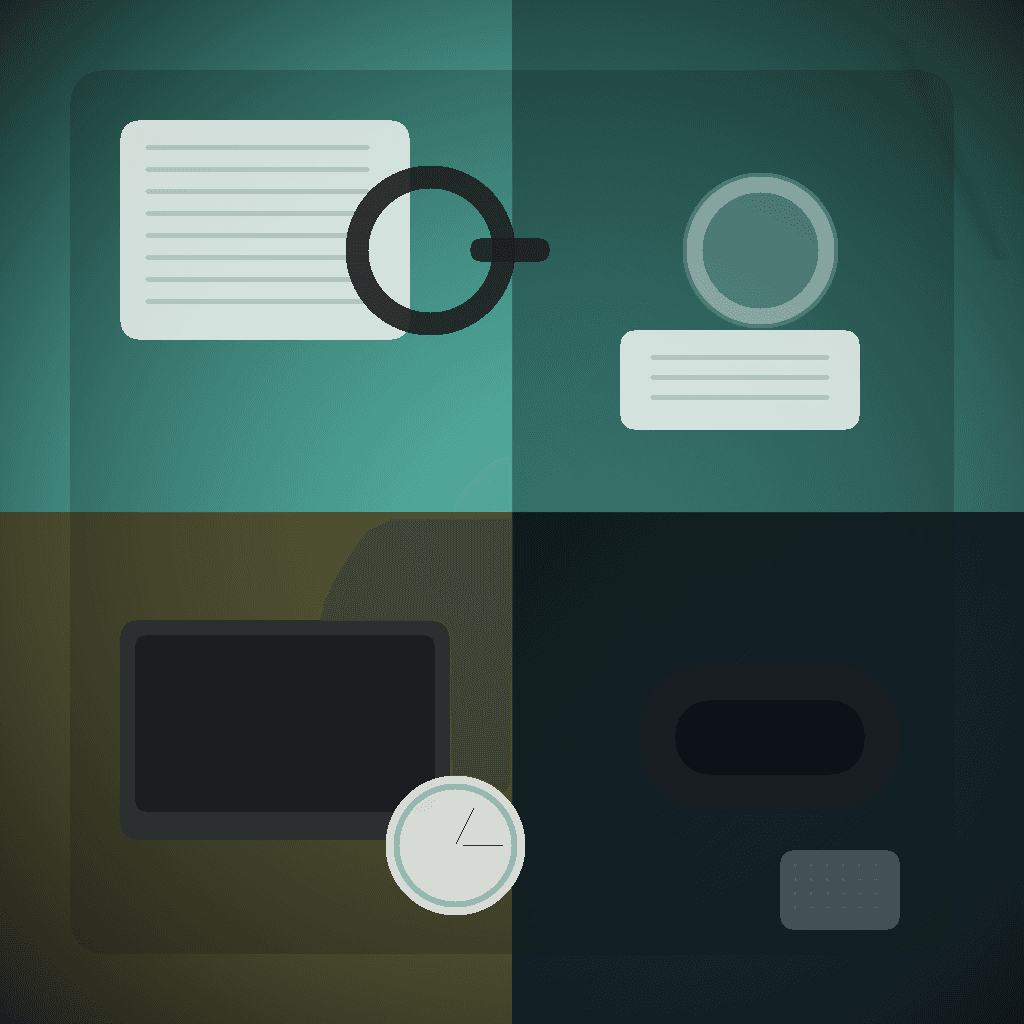
This guide gives you a practical, CEO-friendly framework: a 24-hour Attention Operating System built around four sound-supported windows.
Why leaders lose performance even when they “do everything right”
You can run a disciplined company and still run a chaotic nervous system. Here are the most common failure points:
1) Decision fatigue disguised as productivity
High-volume decision environments (hiring, budgets, roadmap tradeoffs, partner calls) drain executive function. By late afternoon, you may still be active—but less precise.
2) Context-switch residue
Every switch leaves trace cognitive load. If you jump from board prep to Slack firefighting to hiring interviews, you don’t start each block clean. You carry residue.
3) No deliberate downshift
Many leaders treat the day like an on/off button. But attention quality needs intermediate gears. Without downshifts, stress carries into evening, and sleep onset slows.
4) Recovery treated as optional
Sleep is often discussed as “wellness.” For leaders, it’s actually next-day governance infrastructure: emotional regulation, working memory, impulse control, and strategic patience.
The Attention OS framework: four windows in 24 hours
Think of this as a lightweight protocol, not a rigid schedule. You’re not optimizing for perfect routine. You’re optimizing for repeatable state quality.
Window 1 — Prime Focus (Morning): Protect strategic cognition
Goal: Maximize high-value thinking before fragmentation starts.
Duration: 60–120 minutes.
Best for: Strategy, writing, product thinking, key decisions.
How to run it
- Start with a pre-defined outcome (“By 10:30, choose one of two pricing paths”).
- Use a stable focus soundscape (low-distraction, non-lyrical, consistent intensity).
- Keep communication channels closed for one full cycle.
- End with a 3-minute capture: decisions made, open loops, next action.
Why it works
You are leveraging your highest baseline executive function for tasks that compound organizational value. Sound consistency reduces environmental volatility and helps your brain maintain one attentional set longer.
Window 2 — Midday Reset: clear meeting residue before it compounds
Goal: Interrupt cognitive carryover and restore usable attention.
Duration: 8–15 minutes.
Best for: Post-meeting recovery, pre-second-work-block reset.
How to run it
- Step away from primary screen.
- Use a calming, down-regulating sound profile.
- Pair with one physical signal: hydration, short walk, or box breathing.
- Ask one prompt: “What is the next meaningful task, not just the next incoming request?”
Why it works
Without reset, the afternoon becomes reactive triage. With reset, you re-enter intentional mode. This is where many leaders recover 60–90 minutes of otherwise low-quality effort.
Window 3 — Evening Shutdown: protect tomorrow’s cognitive edge
Goal: End operational loops so your brain doesn’t keep “background processing” at night.
Duration: 20 minutes.
Best for: Work closure, stress offloading, planning boundaries.
How to run it
- Switch to a softer decompression soundscape.
- Perform a 3-list shutdown:
- Done today
- First priority tomorrow
- Worries captured (not solved)
- Define a clear stop line (time + condition).
- Avoid high-cortisol inputs after shutdown (heated inbox threads, doom-scrolling, late conflict calls if avoidable).
Why it works
You’re giving the brain closure cues. That reduces rumination and improves sleep latency—the time it takes to actually fall asleep.
Window 4 — Sleep Descent: engineer entry, not just duration
Goal: Transition from alert mode to restorative sleep mode.
Duration: 15–30 minutes before sleep.
Best for: Fast mental downshift, reduced pre-sleep chatter.
How to run it
- Dim light and remove stimulating media.
- Use a low-intensity sleep soundscape with minimal variation.
- Keep devices out of hand-reach if possible.
- If thoughts race, do a one-minute “mental unload” note, then return to audio.
Why it works
Sleep quality starts before your head hits the pillow. Consistent sensory cues train your nervous system to recognize “descent mode” faster over time.
A practical routine: The 4W Leadership Protocol (Focus–Reset–Shutdown–Sleep)
Use this as your default Monday–Friday structure.
Daily sequence
- W1 Focus Block: 90 minutes, first major cognitive task
- W2 Reset Block: 10 minutes after dense meetings
- W3 Shutdown Block: 20 minutes before ending workday
- W4 Sleep Block: 20 minutes pre-sleep wind-down
Weekly cadence
- Week 1: Only implement W1 + W3
- Week 2: Add W2 midday reset
- Week 3: Add W4 sleep descent
- Week 4+: Optimize durations and sound profiles based on outcomes
Track only three metrics (keep it simple)
- Decision quality confidence (1–5) at day end
- Time-to-focus in morning block (minutes)
- Sleep onset friction (easy/moderate/hard)
You don’t need perfect data. You need directional feedback.
Implementation checklist (copy/paste)
Setup (once)
- [ ] Define your four default windows on calendar templates
- [ ] Choose one sound profile per window (don’t over-customize initially)
- [ ] Create a “shutdown note” template with the 3-list method
- [ ] Decide your minimum viable protocol (e.g., W1 + W3 on chaotic days)
Daily execution
- [ ] Morning: run W1 before reactive channels
- [ ] Midday: use W2 after 2+ heavy meetings or conflict calls
- [ ] Evening: complete W3 before final sign-off
- [ ] Night: run W4 with reduced light and no stimulating content
Weekly review (15 minutes, Friday)
- [ ] Which window produced the biggest benefit?
- [ ] Where did protocol break and why (schedule, environment, habits)?
- [ ] One change for next week (duration, timing, stricter boundaries)
Pitfalls that break the system (and how to prevent them)
Pitfall 1: Overengineering the stack
If you spend more time tweaking settings than using the protocol, complexity is winning.
Fix: One default profile per window for two weeks before adjusting anything.
Pitfall 2: Treating sound as magic instead of structure
Audio helps state entry, but it won’t fix unclear priorities.
Fix: Pair each window with one behavioral anchor (outcome statement, breathing, shutdown list, light reduction).
Pitfall 3: Skipping resets on “busy” days
That’s exactly when you need resets most.
Fix: Make W2 non-negotiable after high-friction meeting clusters.
Pitfall 4: Measuring vanity outcomes
“Worked a lot” is not a performance metric.
Fix: Track decision confidence, focus latency, and sleep friction. These are executive-relevant signals.
Pitfall 5: Inconsistent evening boundary
If work leaks into sleep prep, W4 loses power.
Fix: Protect a hard transition: last work action -> shutdown ritual -> personal time -> sleep descent.
Business impact: why this matters beyond personal wellness
This protocol is not about feeling calm for its own sake. It maps to organizational outcomes:
- Higher decision quality: Better cognitive freshness for strategic choices
- Faster execution: Reduced context-switch drag and restart costs
- Lower leadership volatility: Better emotional regulation under pressure
- More predictable output: Sustainable pace beats heroic sprint-and-crash cycles
- Cultural signal: Leaders who model state hygiene normalize healthier, sharper execution across teams
In high-leverage roles, your internal state is not private. It propagates through the business.
FAQ
Is there strong science behind sound-based focus and relaxation?
Evidence is mixed across methods and populations, but there is meaningful support for sound as a state-regulation tool—especially for arousal modulation, relaxation support, and attentional scaffolding in certain contexts. The practical approach is to treat sound as evidence-aware and testable: run a protocol, measure outcomes, keep what works.
Can this help leaders with ADHD traits?
It can be particularly useful when paired with structure. Many ADHD professionals benefit from external rhythm, transition cues, and reduced sensory unpredictability. The key is consistency and low-friction routines, not novelty.
How long before I notice results?
Most leaders notice early gains in perceived focus entry and evening downshift within 3–7 days. More stable benefits (decision quality and sleep consistency) usually require 2–4 weeks of repeated practice.
What if my schedule is chaotic?
Use the minimum viable version:
- W1 on any morning with strategic work
- W3 every evening
- Trigger W2 only after intense meeting clusters
Consistency beats completeness.
Do I need headphones?
Not always. Headphones can improve immersion for focus and relaxation sessions, but speakers may be sufficient for certain environments. Use what increases adherence.
Is this replacing sleep hygiene or clinical support?
No. This is a performance-support routine, not medical treatment. If sleep or attention issues are severe or persistent, clinical guidance is appropriate.
Final takeaway
Leadership performance is often framed as a calendar, strategy, and talent problem. But at the operating level, it is also a state management problem.
A structured daily sound protocol gives you a practical way to improve transitions between deep work, meetings, decompression, and sleep—without adding heavy process overhead. That means better decisions when they matter, lower cognitive drag across the day, and more reliable energy over the week.
Start small. Run two windows for one week. Measure what changes. Then scale.
Because the real advantage isn’t doing more things.
It’s doing the right things with a sharper mind.
Try Ozia Free for 7 Days
If you want a simple way to enter focus faster, reset between high-pressure blocks, and sleep with less mental noise, start your Attention OS with Ozia.
- Science-aware soundscapes for focus, relaxation, and sleep
- ADHD-friendly routines and structured session support
- Fast setup, no complex protocol required
Start here: https://app.ozia.live/welcome